



Chinese New Year: A Heartfelt Journey Home Across Thousands of Miles, the Warmest "Red" in the World
In the East of the world, as the twelfth lunar month begins each year, a massive migration, rich with emotion, quietly commences. This is more than just a festival; it's a biological clock etched into the bones of Chinese people—no matter where they are, regardless of whether the past year has been bountiful or challenging, as soon as the "New Year" approaches, hearts turn towards one direction: Home.
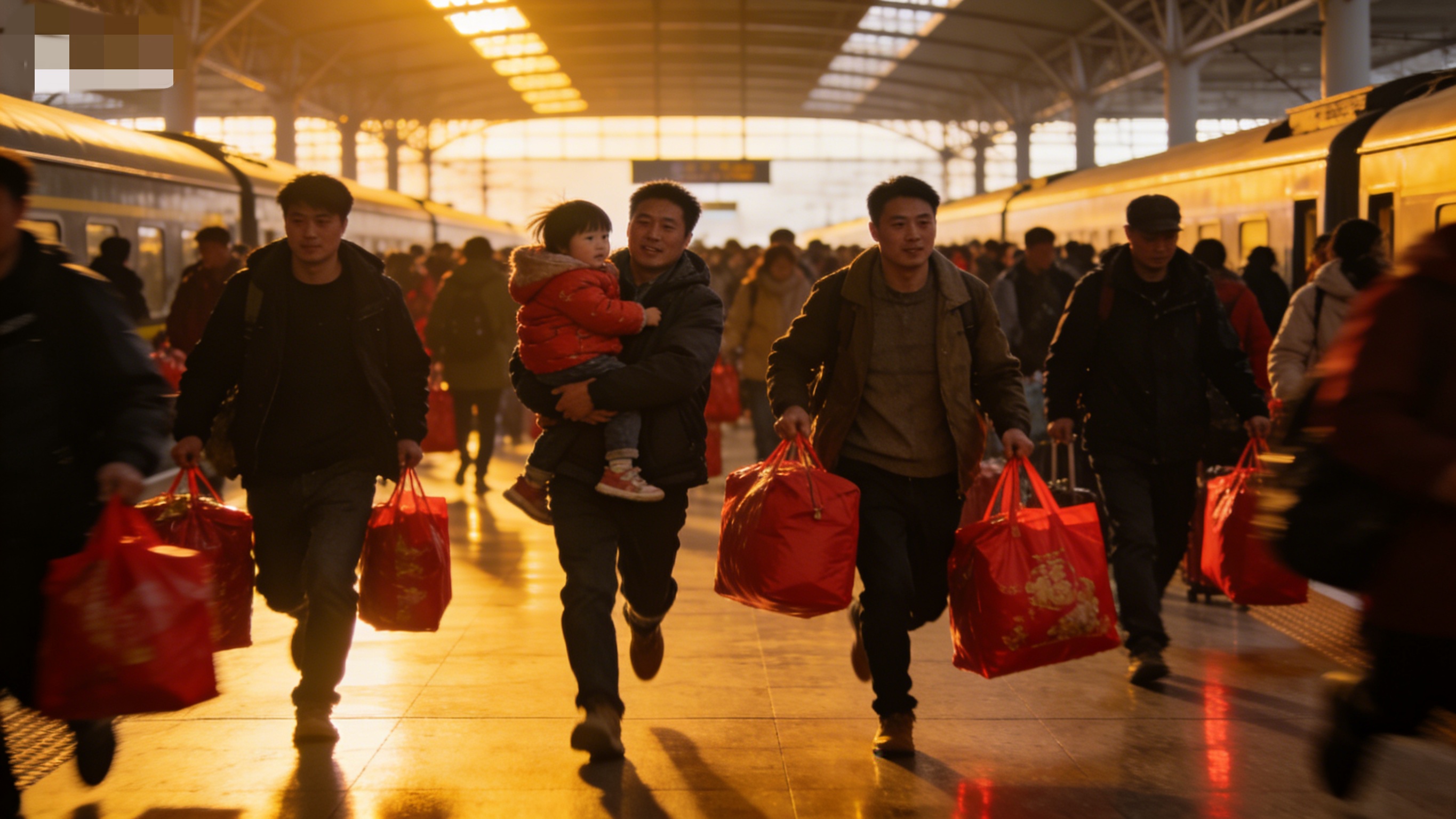
I. Cleaning and Decorating: A Ritual of Farewell and Welcome

"On the 24th day of the twelfth lunar month, sweep dust from the house."
The busyness before the New Year is a happy busyness. Cleaning the house symbolizes "removing the old to make way for the new," sweeping away all the bad luck and dissatisfaction of the past year. The creaking sound of furniture being moved, mixed with the scent of cleaning supplies, forms the prelude to the New Year.
But what truly excites the senses is the overwhelming wave of "Chinese Red" .
Red lanterns hang from the eaves, red couplets are pasted on doorframes, and red paper-cuttings brighten the windows. If you look closely, you'll notice many families paste the "Fu" (fortune) character upside down. Passersby always smile knowingly: "Fortune has arrived!" This simple pun contains the Chinese people's most sincere wish for life.
II. New Year's Eve: The Comfort of Everyday Life Amidst Festive Fireworks
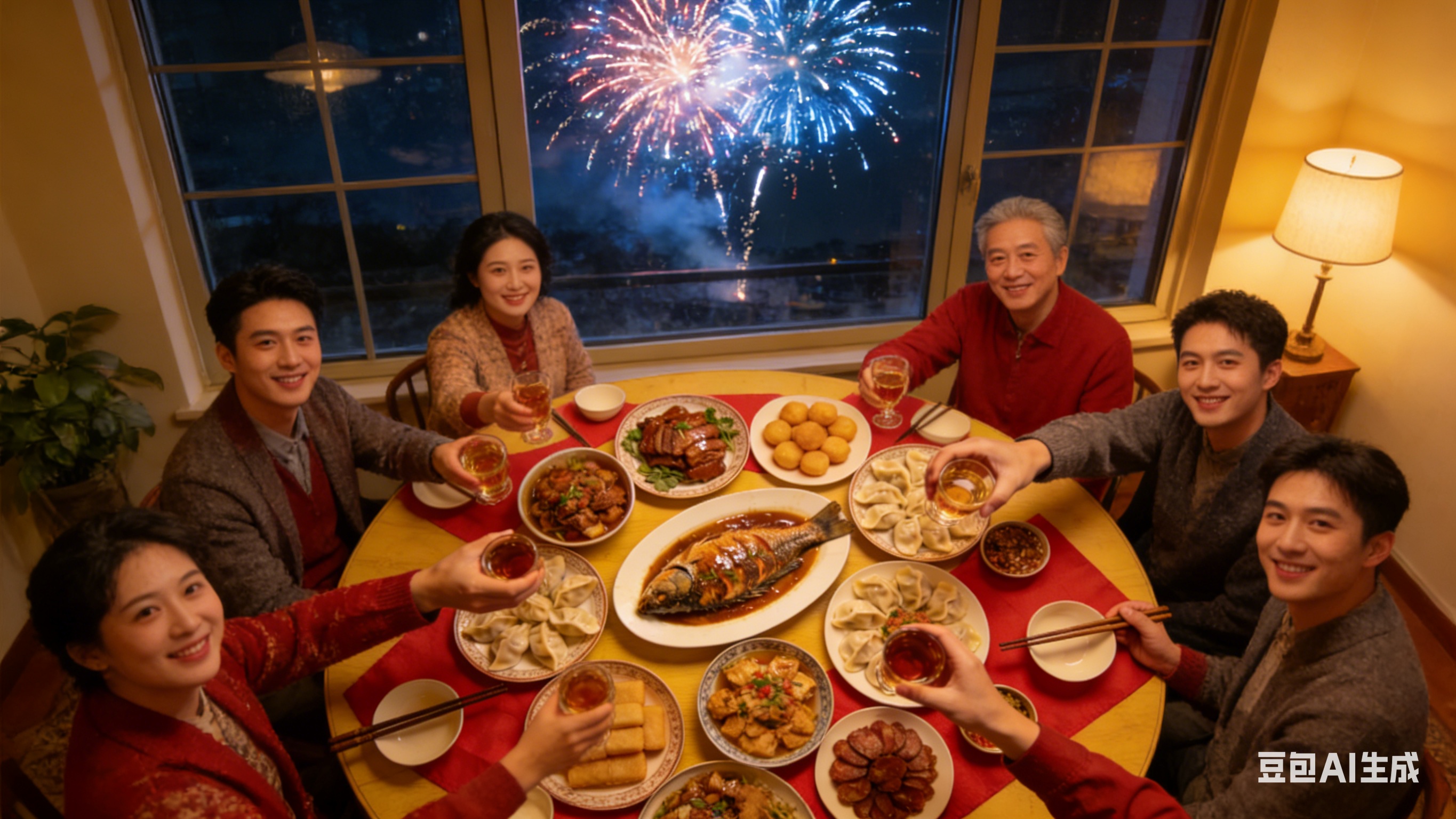
New Year's Eve is the heart of the entire New Year celebration.
From mid-afternoon, the kitchen becomes a symphony of sounds: the thumping of cleavers on chopping boards, the sizzling in oil pans, the叮嘱声 (zhǔfù shēng - advice) of elders, and the playful noise of children intertwining. This meal is called the "New Year's Eve Dinner" .
Fish is essential, symbolizing "surplus year after year" (年年有余 - nián nián yǒu yú).
Dumplings resemble ancient Chinese gold ingots, eating them signifies "bringing in wealth and treasure."
New Year cake (Niángāo) is soft and sticky, embodying the wish for "promotion and prosperity year by year."
As the countdown from the Spring Festival Gala hosts echoes from the television, the sound of firecrackers outside merges into a thunderous symphony. Fireworks streak across the night sky, blooming in an instant. At that moment, whether in the icy north or the warm south, everyone's heart is enveloped by the same joy. For children, the most anticipated moment is finding the bright red "red envelope (yāsuì qián)" tucked under their pillow. Legend says this money suppresses a monster called "Suì," blessing the child with a safe and peaceful year.
III. Greetings and Reunions: The Flow of Warmth and Connection
On the first day of the New Year, people don new clothes and head out to visit relatives and friends.

A simple "Happy New Year (Guònián hǎo)" accompanied by a traditional gesture of salute (zuòyī) can dissolve past estrangements and unfamiliarity. Coffee tables are perpetually piled high with sunflower seeds, candies, and preserved fruits. Everyone sits together, cracking seeds, chatting about interesting events from the past year, and looking forward to plans for the new one.
This is the essence of Chinese interpersonal warmth (rénqíng wèi). During this week, busyness takes a pause, distances shrink, and the affection that is often hard to express flows freely through greetings and hugs, all under the guise of "celebrating the New Year."
IV. Tradition and Modernity: An Everlasting Cultural Imprint
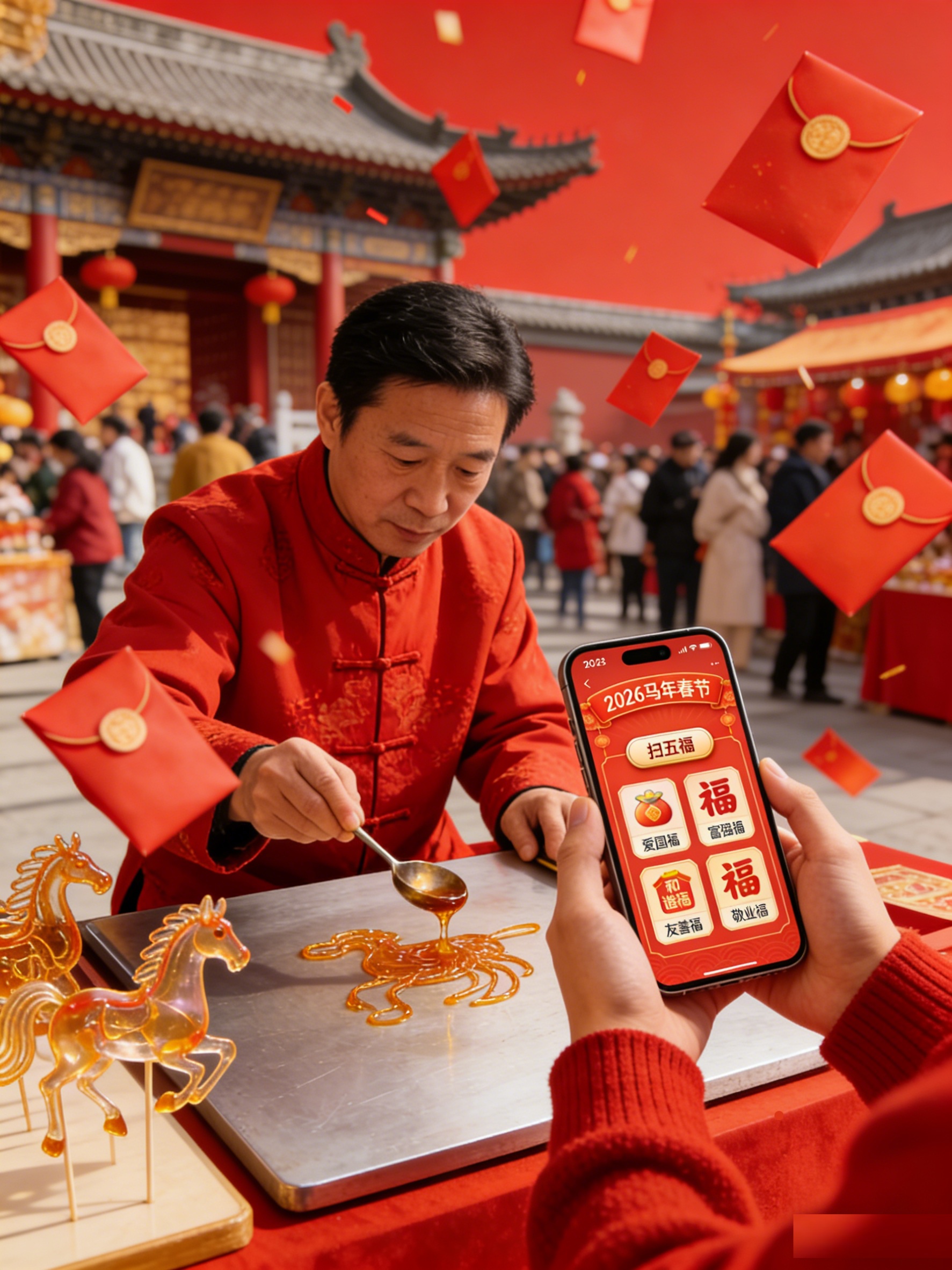
As times change, the forms of celebrating the New Year are also subtly evolving.
The older generation holds onto traditions like making the first incense offering at the temple, attending temple fairs, and watching operas. Meanwhile, the younger generation enthusiastically participates in collecting digital "Five Blessings" (jí fú) on their phones, grabbing red packets (hóngbāo) in apps, and using video calls to greet friends afar. Fireworks, once banned, are now returning in many cities in the form of more environmentally friendly and spectacular light shows.
Yet, no matter how the forms change, the core of the New Year remains constant.
It is a form of healing—healing the sense of wandering in the hearts of those away from home.
It is a kind of adhesive—binding together family ties that might otherwise fray.
It is a symbol of hope—proclaiming that no matter how long and harsh the winter, spring will inevitably arrive.
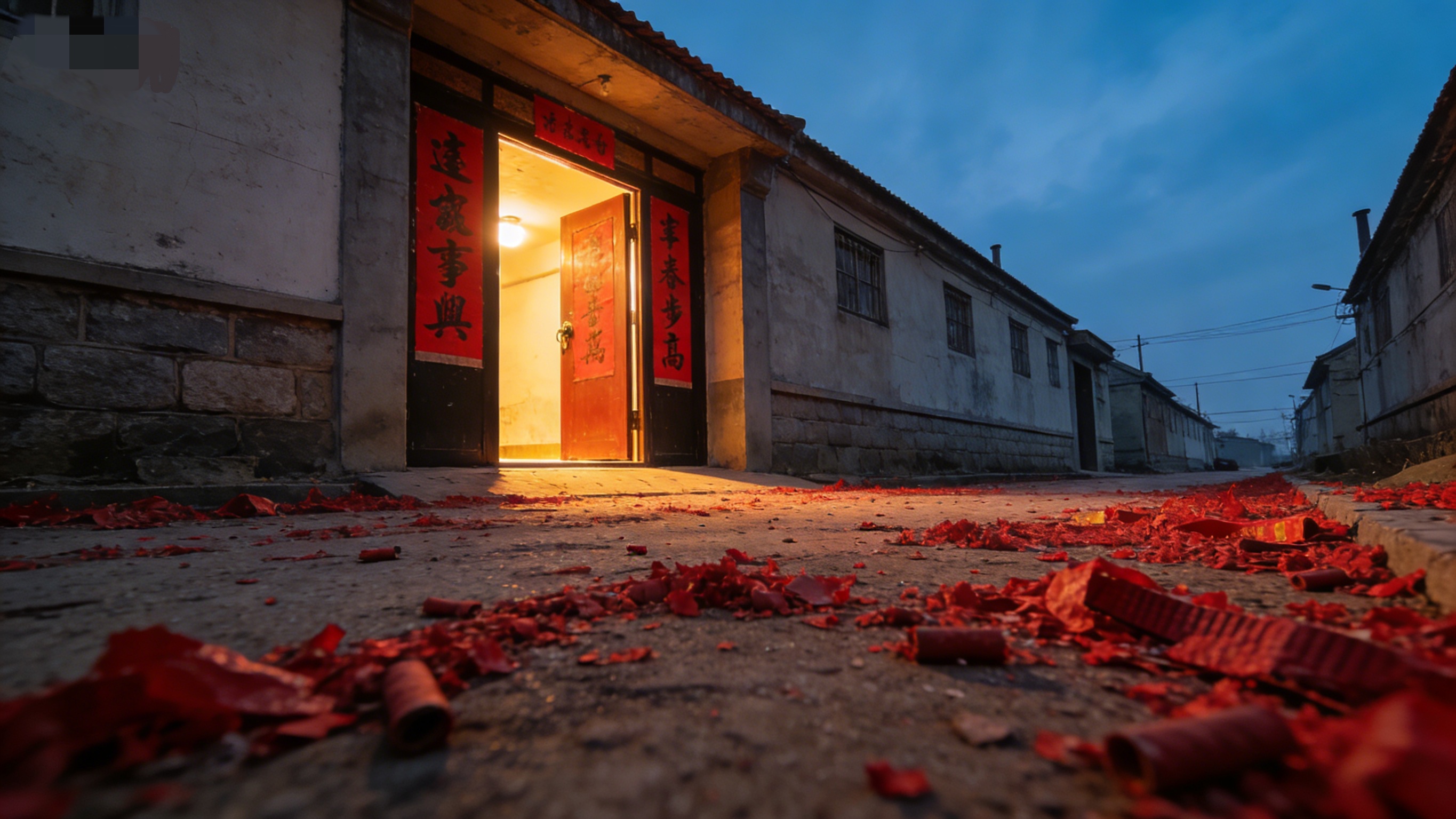
Chinese New Year is a pass in time, a resting point for the soul. If you have the opportunity to experience Chinese New Year in China, be sure to immerse yourself in this sea of red, share a New Year's Eve dinner, and hear the crackle of firecrackers. You will discover that this joy of reunion and hope is a universal, beautiful emotion shared by all humanity.