


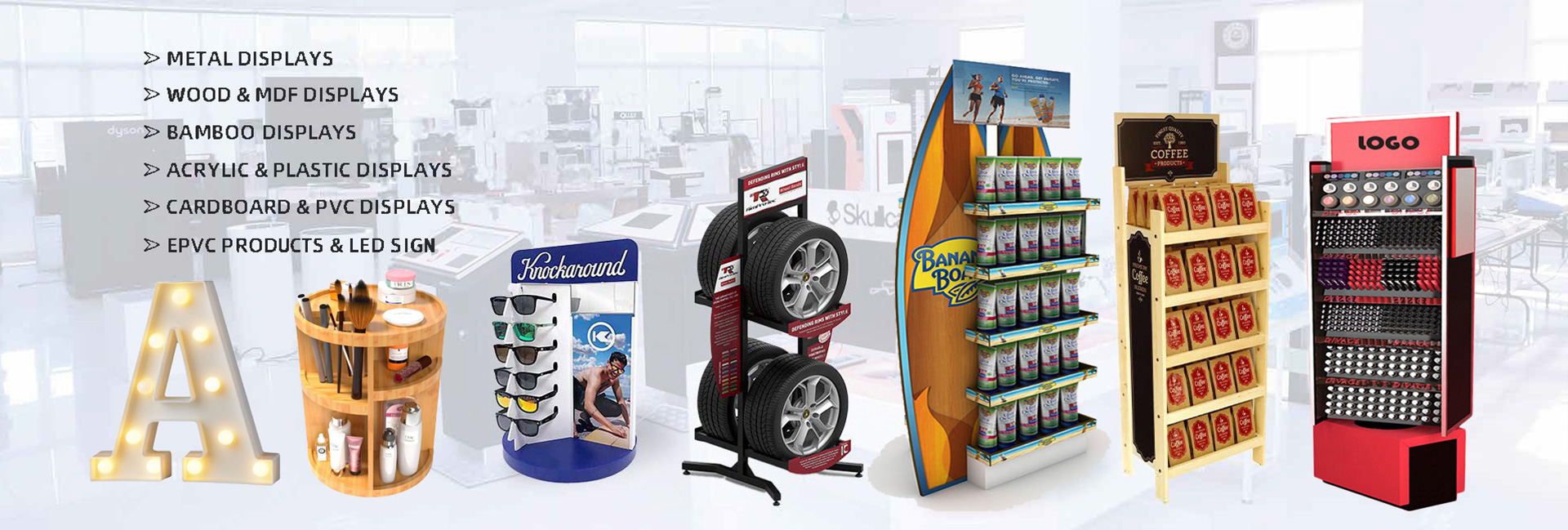
Supermarket display rack: retail terminal standardized display core display equipment
Supermarket display racks are specialized display equipment for offline retail scenes such as supermarkets, convenience stores, and chain stores. They are the basic supporting facilities for modern retail terminal space layout, product display, and category management. As the core display carrier of offline stores, supermarket display racks are mainly used to standardize the placement of various retail products. Through scientific structural design and spatial layout, they can regulate the display order of stores, optimize shopping flow, and enhance product display effects. They are widely used in all categories of retail scenes such as fast-moving consumer goods, daily necessities, food, beverages, mother and baby products, beauty, and light department stores.

From the perspective of product classification, supermarket display racks can be divided into various mainstream styles based on usage scenarios and display categories, with strong universality and adaptability. Common types include single-sided supermarket display shelves, double-sided island display shelves, end promotion display shelves, exclusive category display shelves, and multi-layer floor standing display shelves. Among them, single-sided display shelves are often used for wall mounted display in stores, carrying conventional goods such as drinks, snacks, and daily necessities; The double-sided island display rack is placed in the middle area of the store to maximize the use of store space and achieve dense display; The front-end display rack focuses on showcasing promotions, new products, and popular items, and is the core equipment for store traffic attraction and promotion. It fully meets the needs of supermarkets for daily display, new product launch, holiday promotions, special offers, and other different scenarios.

In terms of functional design, the supermarket display rack follows the ergonomics and spatial utilization logic of retail display, with a focus on practicality and standardization. The standardized layer height can be freely adjusted to adapt to products of different sizes and specifications, flexibly matching the display needs of snacks, beverages, daily necessities, small items, and other different goods, solving the problems of traditional display disorder, space waste, and limited placement. The overall structure is stable and orderly, with balanced load-bearing performance, and can adapt to the business environment of high-frequency replenishment and high-frequency pedestrian flow for a long time. It is not easy to shake or deform, and can maintain a clean and orderly display state for a long time.

In terms of appearance and details, the modern supermarket display stand features a simple and versatile design style, with clean colors and neat lines that can adapt to the decoration style and store atmosphere of various supermarkets and convenience stores. The surface of the equipment has been professionally processed to have the basic characteristics of wear resistance, moisture resistance, dust prevention, and easy cleaning. It is suitable for the daily high-frequency cleaning and maintenance needs of supermarkets, effectively adapting to the normal operation scenarios of offline retail and reducing the difficulty of store display maintenance. At the same time, the modular assembly structure is simple and lightweight, with convenient disassembly, transportation, and reorganization. The display combination can be adjusted at any time according to the store layout, store renovation, and scene transformation, with strong flexibility.

In retail terminal operations, standardized supermarket display racks are the foundation of refined store operations. A unified and standardized display rack can clearly divide product categories and zones, making it convenient for consumers to make quick purchases and enhancing the shopping experience; At the same time, it can maximize the use of the three-dimensional space of the store, improve the quantity and quality of product display, make the store display more standardized and regulated, and effectively enhance the overall image of the terminal and the efficiency of product sales.
With its wide adaptability, strong practicality, neat and beautiful appearance, and durable and worry free characteristics, supermarket display racks have become an indispensable basic supporting equipment for offline retail stores, covering various terminal scenarios such as large and small comprehensive supermarkets, community supermarkets, chain convenience stores, and boutique retail stores. It is the core infrastructure for achieving standardized display, optimizing store image, and standardizing product management in stores.